
Quality management built for the full arc of a life sciences organization
Life sciences organizations don't stay in one regulatory lane. Research becomes translational. Translational becomes clinical. Clinical becomes commercial. Each phase brings new GxP requirements, new auditors, and new data integrity expectations — and the quality system has to follow the molecule through every transition. Kintavo gives life sciences quality teams a single platform that grows with the science — document control, CAPA, change control, risk management, and AI-powered gap detection — configured for where you are today and ready for where you're going.
One platform for every quality domain a GxP life sciences organization manages.
An umbrella platform for research, translational, and clinical-stage life sciences organizations operating under GxP.
Document Control
Controlled procedures, work instructions, and study protocols with electronic signatures auditors accept.
Learn moreCAPA Management
Structured corrective and preventive action workflows for deviations, observations, and trended findings.
Learn moreChange Control
Formal change-request workflows with impact assessment, multi-tier approval, and validation gating.
Learn moreTraining Management
Version-linked role-based training that retires automatically when documents revise.
Learn moreAudit Management
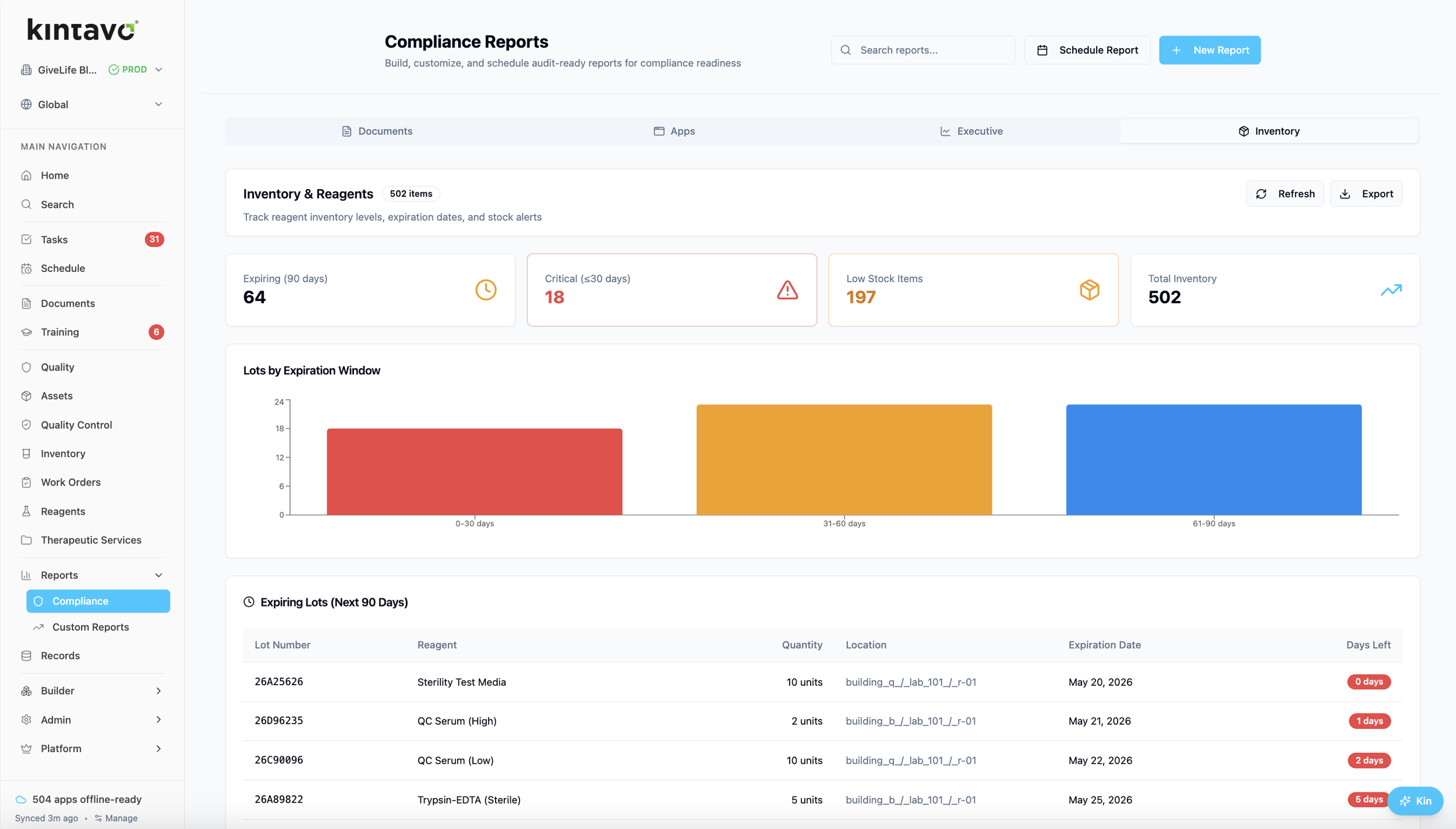
Internal audits, sponsor audits, regulatory inspections — planning, observation tracking, and CAPA integration.
Learn moreRisk Management
ICH Q9 and ISO 14971-aligned risk register management for product, process, and quality system risks.
Learn moreSupplier Quality
Vendor qualification, approved-supplier list management, and recurring re-evaluation workflows.
Learn moreAI Smart Assist™
Semantic search across every record, pattern detection across deviations, and compliance-gap surfacing.
Learn more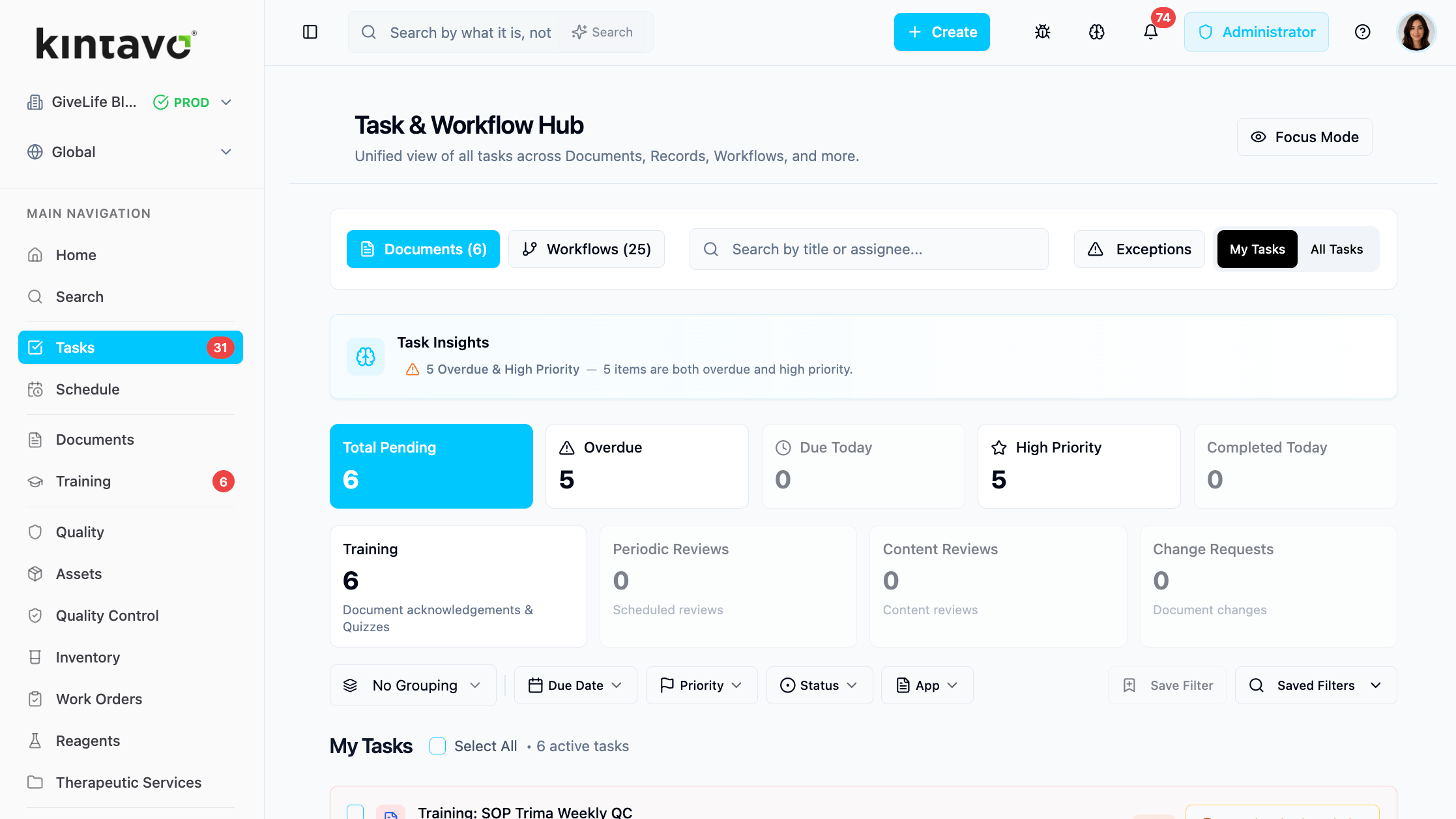
Compliance coverage for life sciences quality management.
Same platform, configured for the regulations your organization grows into.
Good Practice guidelines — GMP, GCP, GLP, GDP — across research, clinical, and commercial stages.
FDA electronic records and signatures for regulated functions.
European computerised systems requirements for GMP-regulated activities.
Quality risk management principles and tools.
Pharmaceutical quality system framework across product lifecycle.
Good Automated Manufacturing Practice for computerized system validation.
Security and availability controls for life sciences data.
Grows with the science.
Same platform from research through commercial — no replatform when phase changes.
When your life sciences organization runs on Kintavo.
A quality system that grows with the science — instead of breaking at every phase transition.
Research-stage SOPs grow up into GMP procedures without re-platforming.
CAPA links to deviation links to change links to training — visible in one map.
The AI surfaces patterns across studies that no analyst has time to find.
Audit readiness is continuous, not seasonal.
Your team stops operating the QMS and starts operating the science. The platform handles the audit trail; people do the work that only people can do.
Book your demoFAQ Questions & Answers
Q: Is Kintavo built for life sciences organizations specifically? Kintavo is configured for the quality management requirements of GxP-regulated life sciences organizations — from early-stage research through clinical development and commercial manufacturing. Document Control manages controlled procedures and study protocols under version control with electronic signatures. CAPA Management enforces structured root-cause workflows. Change Control gates process and system changes with impact assessment and validation tracking. Risk Management supports ICH Q9 and ISO 14971 risk register frameworks. The platform is designed to grow with the organization rather than requiring a re-platform at each phase transition.
Q: How does Kintavo handle the shift from research-stage to GMP quality requirements? The same platform that manages research-stage SOPs and study protocols in Kintavo scales to GMP procedure control without migrating to a different system. Document workflows can be configured to meet GLP requirements at the research stage and tightened to full GMP approval gating — multi-tier review, impact assessment, validation holds — when the organization enters clinical or commercial manufacturing. Historical records carry forward. The audit trail is continuous. There is no re-platform, no data migration project, and no gap in the chain of custody of quality records.
Q: How does Kintavo support 21 CFR Part 11 compliance? Every record in Kintavo — document approvals, training acknowledgments, deviation closures, CAPA sign-offs, change control authorizations — is captured with a time-stamped, user-attributed electronic signature that meets 21 CFR Part 11 requirements. The audit trail is immutable and exportable. Access controls, password policies, and audit log completeness are built into the platform infrastructure. For life sciences organizations under FDA oversight, Kintavo's electronic record system satisfies the predicate rule requirements of 21 CFR Parts 210, 211, 312, and 820 alongside the electronic signature requirements of Part 11.
Q: How does Kintavo support EU Annex 11 compliance? Kintavo is built as a validated computerized system meeting the requirements of EU GMP Annex 11 — including access control, audit trail completeness, data integrity, backup and recovery, and change control for the system itself. For life sciences organizations operating under EMA oversight or running EU clinical trials, Kintavo's computerized system validation documentation package supports the qualification evidence required by Annex 11 without requiring a custom validation project for each deployment.
Q: How does change control work for GMP processes in Kintavo? Kintavo's Change Control module manages formal change requests with configurable impact assessment workflows, multi-tier approval routing, and validation gating — so a process change cannot be implemented until all required approvals, risk assessments, and validation activities are documented and complete. Changes link to the SOPs they affect, the training assignments they trigger, and the CAPAs or deviations that initiated them. The full change history for any process, system, or procedure is retrievable from the 360° Compliance Map™ in a single view.
Q: How does Kintavo support ICH Q9 risk management? Kintavo's Risk Management module supports ICH Q9-aligned quality risk management — risk identification, assessment, evaluation, mitigation, and review — using configurable risk tools including FMEA, fault tree analysis, and risk ranking matrices. Risk records link to the CAPAs, deviations, change controls, and audit findings that generated or modified them. Residual risk levels update automatically as mitigation actions close. The full risk register is exportable for regulatory submissions, sponsor audits, or internal quality reviews.
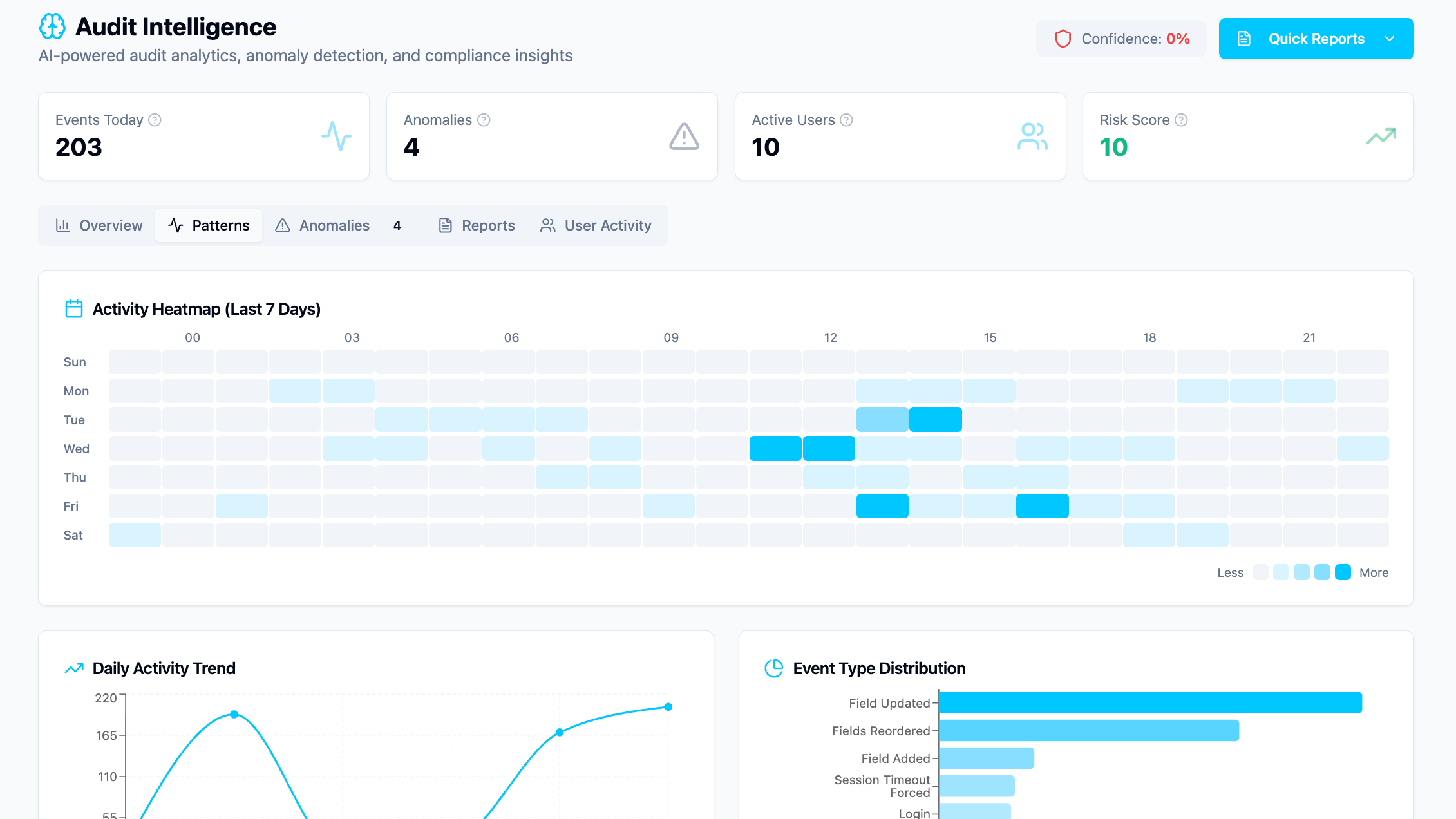
Q: How does Kintavo support sponsor audits and regulatory inspections? Kintavo's Audit Intelligence™ continuously monitors your quality records against configurable regulatory frameworks — GxP, ICH Q10, 21 CFR Part 211, and others — surfacing gaps and likely findings before an auditor or inspector does. Pre-inspection reports pull current evidence across every module: document versions, training completions, open deviations, CAPA status, change control closure. What used to take two weeks of manual preparation takes hours. During an inspection, any record can be retrieved in seconds from the same system where it was created.
Q: How does AI Smart Assist™ work for life sciences quality data? AI Smart Assist™ operates exclusively on your organization's data within Kintavo — no external data sharing, no model training on your records. It performs semantic search across documents, CAPAs, deviations, training records, audit findings, and change controls simultaneously. It surfaces related records automatically when a new quality event is created — showing precedent CAPAs, similar deviations, and linked risk register entries. It detects patterns across records that manual analysis typically misses: recurring root causes across apparently unrelated deviations, compliance gaps that span multiple modules, training lapse patterns by role or site. Every AI action is logged in the audit trail and attributed to the user who initiated it.
Q: Can Kintavo support multi-site life sciences organizations? Yes. Life sciences organizations operating across multiple sites — research facilities, clinical sites, contract manufacturing organizations, or commercial manufacturing plants — can be managed under one Kintavo tenant with site-specific permissions, workflow configurations, and reporting. Each site sees the records relevant to its operations and regulatory context. Quality leadership sees consolidated metrics across all sites. Cross-site trending — identifying recurring deviation patterns across facilities, or training gaps that span multiple locations — is visible from the central dashboard without pulling separate reports from each site.
Q: Does Kintavo support supplier qualification for GxP supply chains? Yes. Kintavo's Supplier Quality module manages vendor qualification workflows, approved supplier list maintenance, and periodic re-evaluation for GxP supply chains — raw material suppliers, contract manufacturers, contract testing laboratories, and critical service providers. Each supplier record links to the deviations they contributed to, the CAPAs that addressed them, and the changes made to sourcing or specifications as a result. Certification expiration alerts and re-qualification workflows run automatically. The complete supplier quality history for any vendor is retrievable for regulatory review or sponsor audit.
Q: What does implementation look like for a life sciences organization? Your implementation lead works with your quality team to configure document control workflows, training curricula, deviation categories, CAPA process requirements, change control gating, risk management frameworks, and regulatory framework mappings — typically within the first two to three weeks of onboarding. Existing SOPs, open quality records, and risk registers can be migrated from spreadsheets or prior systems. The platform is designed to be validated by your organization as a GxP computerized system, and Kintavo provides IQ/OQ documentation to support that effort. Most life sciences organizations are processing live quality events in Kintavo within 30 days of kickoff.
Life sciences organizations cross regulatory boundaries the way most companies cross departments.
Research today. Clinical tomorrow. Commercial next year. Each phase carries its own regulations, its own auditors, its own data integrity expectations. The quality systems built for one phase break at the next.
And yet the data that matters — the deviations, the design changes, the trained-on procedures — has to follow the molecule through every phase transition. That is the system Kintavo replaces.