
Quality management built for the multi-sponsor complexity of contract research
A CRO doesn't run one quality system. It runs one quality system that has to behave differently for every sponsor it works with — each with their own SOPs, their own deviation notification requirements, their own escalation paths, their own audit expectations. GCP sets the floor. ICH E6 (R3) raised it. And every sponsor raises it again for their program. Kintavo gives CRO quality teams a single platform that turns sponsor variation into configuration — protocol deviations routed by sponsor SOP, monitoring findings tracked across studies, audit prep continuous rather than seasonal, and sponsor confidence represented in a live dashboard rather than a manually compiled deck.
One platform for every quality domain a CRO operates under.
GCP-aligned quality and document control across multi-site, multi-sponsor clinical research operations.
Document Control
Master SOPs, sponsor-specific quality manuals, study protocols, and essential documents with version control.
Learn moreTraining Management
Role-based, study-specific, and sponsor-specific training with GCP competency tracking and renewal.
Learn moreDeviation Management
Protocol deviation capture routed by sponsor SOP — severity classification, sponsor notification, and follow-up.
Learn moreCAPA Management
Corrective action workflows for audit findings, monitoring observations, and sponsor escalations.
Learn moreAudit Management
Internal QA audits, sponsor audits, regulatory inspections — across studies and sites.
Learn moreRisk Management
Risk-based quality management aligned to ICH E6 (R3) — proactive risk identification across studies.
Learn moreWorkflow Builder
Sponsor-specific workflows, escalation paths, and approval routing — configured per study, not per organization.
Learn moreSupplier Quality
Vendor qualification for labs
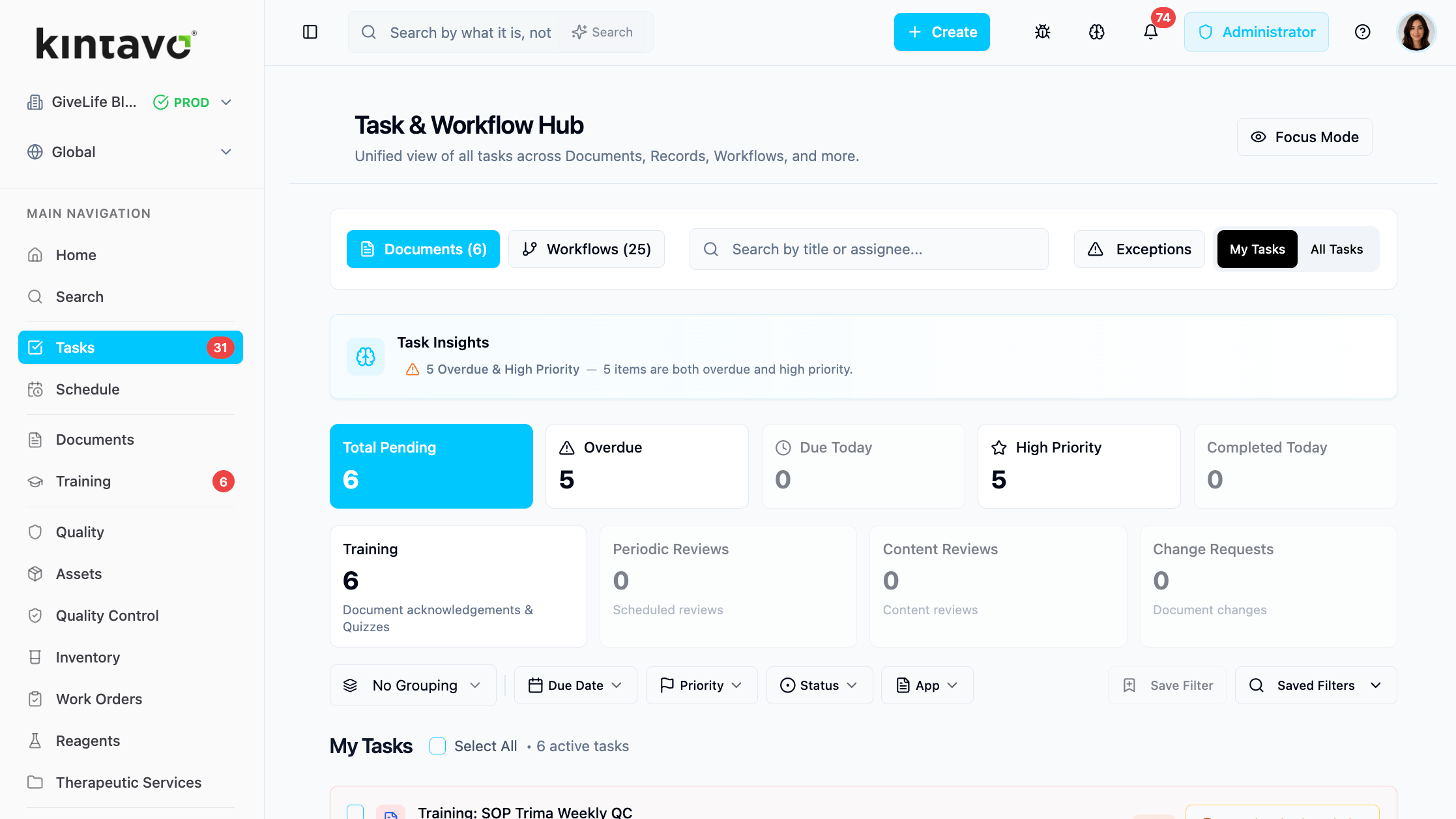
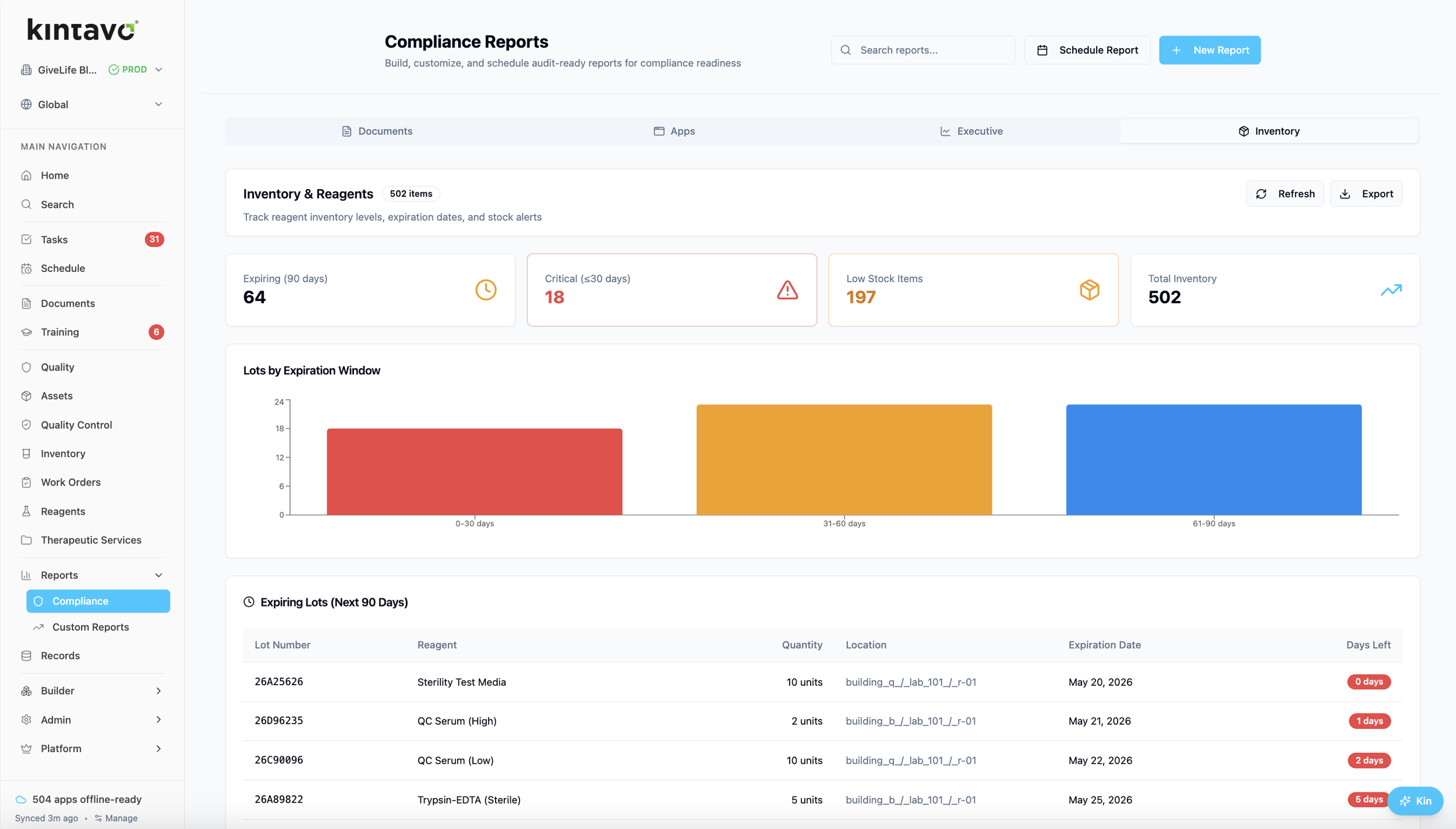
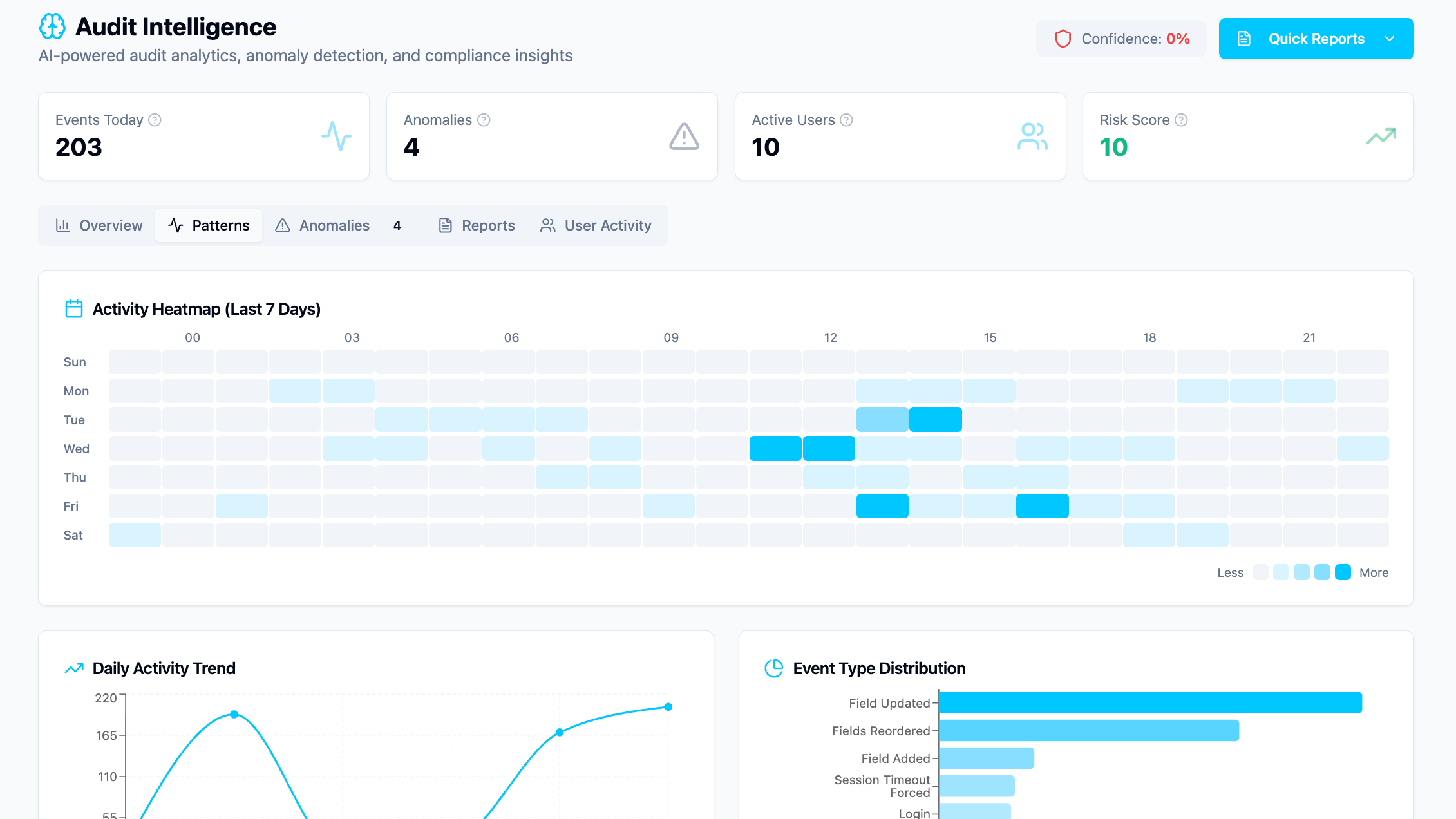
Compliance coverage for clinical research operations.
GCP, ICH E6 (R3), and sponsor SOPs — all rendered through one platform.
Good Clinical Practice — ICH and FDA expectations for clinical trial conduct.
Integrated addendum — risk-based quality management for clinical trials.
FDA electronic records and signatures.
Clinical Trials Regulation (EU) 536/2014.
Clinical investigation of medical devices for human subjects.
Quality management across operations.
Security and availability controls for clinical data and sponsor information.
Sponsors × sites × studies.
Different SOPs per sponsor. Different escalation paths per study. Same platform.
SOP-A4 escalation
SOP-A4 escalation
SOP-B2 escalation
SOP-C1 escalation
When your CRO runs on Kintavo.
Protocol deviations route by sponsor SOP — not by chance. Monitoring findings carry across studies. Audit prep is continuous.
Protocol deviations route by sponsor SOP, not by chance.
Site qualification, monitoring visits, and essential documents stay linked end-to-end.
Audit findings carry across studies so the same mistake doesn't happen twice.
Sponsor confidence is a dashboard, not a deck.
Your QA team stops chasing CTMS exports and starts watching the signal. The risk-based quality management ICH E6 (R3) describes becomes the way work actually happens.
Book your demoFAQ Questions & Answers
Q: Is Kintavo built for CRO quality management? Kintavo is configured for the specific quality management requirements of contract research organizations — GCP, ICH E6 (R3), 21 CFR Part 11, EU CTR, and sponsor SOP requirements across multi-site, multi-sponsor clinical research operations. Document Control manages master SOPs alongside sponsor-specific quality manuals and study-specific essential documents. Deviation workflows route by sponsor SOP — severity classification, notification timelines, and escalation paths are all sponsor-configured. Training Management tracks GCP competency, study-specific training, and sponsor-required training renewals. The Workflow Builder configures different quality processes per sponsor without requiring separate systems for each.
Q: How does Kintavo support ICH E6 (R3) risk-based quality management? ICH E6 (R3) calls for a proactive, risk-based approach to clinical trial quality — identifying and mitigating risks before they become protocol deviations or GCP findings. Kintavo's Risk Management module supports systematic risk identification, assessment, and mitigation tracking across active studies. Risks link to the quality events they generate — protocol deviations, monitoring observations, CAPA records — so the risk register stays current rather than becoming a document that expires at study start. Audit Intelligence™ monitors quality posture continuously, surfacing deviations from expected risk patterns before a sponsor audit or regulatory inspection finds them.
Q: How does Kintavo handle sponsor SOP requirements that differ across programs? Each sponsor program in Kintavo can have its own workflow configuration — deviation categories, severity classifications, notification timelines, escalation paths, and approval routing — built through the Workflow Builder without IT involvement. When a protocol deviation occurs on a Sponsor A study, it routes through Sponsor A's SOP requirements. The same event on a Sponsor B study routes through Sponsor B's requirements. The CRO's master SOP library applies to all programs. Sponsor-specific requirements are configuration layers on top. Sponsor auditors see a quality system that reflects their program's SOPs, not a generic view.
Q: How does Kintavo support sponsor audits of CRO quality systems? When a sponsor schedules a QA audit of CRO operations, Kintavo's Audit Management module organizes the scope, checklist, observation capture, and CAPA integration scoped to that sponsor's program records. Pre-audit reports pull current evidence from the sponsor-relevant records: SOP currency, training completions for study staff, open protocol deviations, monitoring observation CAPAs, site qualification status, and essential document completeness. The sponsor's auditors see a quality system that reflects their program — not a filtered view of an unrelated dataset.
Q: How does protocol deviation management work across multiple studies? Protocol deviations in Kintavo are captured through structured workflows with required fields by deviation category — protocol procedure, eligibility criteria, informed consent, IP handling, and others. Each deviation routes per the sponsor's SOP for that study — severity classification triggers sponsor notification timelines automatically, and escalation to medical monitor or regulatory authority follows the configured path. Trending across deviation categories within a study surfaces systemic issues early. Cross-study trending visible to CRO quality leadership identifies site-level or staff-level patterns that no single study's data would reveal.
Q: How does training management work for CRO staff working across multiple sponsors and studies? Training in Kintavo is study-specific, sponsor-specific, and role-based simultaneously. When a CRA or coordinator is assigned to a new study, the study-specific training curriculum assigns automatically. When a sponsor SOP is updated, the re-training notification routes to all staff assigned to that sponsor's studies. GCP refresher requirements track per staff member with renewal date alerts. Sponsor-required training certificates are maintained in the staff training record. When a sponsor auditor asks for training records for the monitoring team that visited a site, the complete training history is retrievable in seconds.
Q: How does Kintavo support multi-site clinical trial operations? Each clinical site in Kintavo can have its own workflow configurations, escalation contacts, and training requirements while operating within the same study and sponsor framework. Site qualification, monitoring visit records, site-specific essential documents, and site-level deviation history all link to the central study record. When a CRO operates the same study across twenty sites, quality metrics aggregate across all sites simultaneously — so site-level outliers and cross-site trends surface in the QA dashboard without requiring manual compilation from site coordinators or CTMS exports.
Q: How does Kintavo handle monitoring observation management? Monitoring observations in Kintavo are captured as structured records — categorized, linked to the study and site, and routed through the CRO's follow-up workflow with required resolution timelines per sponsor SOP. Observations that generate corrective action requirements initiate CAPAs directly from the monitoring record. Repeat observations at the same site — or the same observation category across multiple sites — surface as trending signals in the QA dashboard before becoming findings in a sponsor audit. The complete monitoring history for any study is retrievable for sponsor review or regulatory inspection.
Q: How does Kintavo support regulatory inspections of CRO operations? Regulatory inspections of CRO operations — FDA Form 483 observations, EMA GCP inspections, PMDA clinical trial audits — require the CRO to demonstrate that its quality system governs clinical trial conduct across all active and completed studies. Kintavo's Audit Intelligence™ continuously monitors quality posture against GCP requirements, surfacing compliance gaps before an inspector does. Pre-inspection reports pull current evidence across all studies and sites. During an inspection, any record — protocol deviation history, monitoring observation log, training records for specific staff, CAPA closure evidence — is retrievable in seconds from the same system where it was created.
Q: Is Kintavo 21 CFR Part 11 compliant for clinical trial records? Yes. Every record in Kintavo — protocol deviations, training completions, monitoring observations, CAPA closures, document approvals — is captured with a time-stamped, user-attributed electronic signature that meets 21 CFR Part 11 requirements. The audit trail is immutable and exportable. For CROs conducting FDA-regulated studies, Kintavo's electronic record infrastructure satisfies the predicate rule requirements of 21 CFR Parts 312 and 812 alongside the electronic signature requirements of Part 11. For EU-regulated trials, the system meets EU CTR and GCP Annex 11 expectations for computerized systems used in clinical trial quality management.
Q: What does implementation look like for a CRO? Your implementation lead works with your quality leadership to configure master SOPs, GCP training curricula, deviation categories, sponsor-specific workflow templates, monitoring observation workflows, site qualification checklists, and regulatory framework mappings — typically within the first two to three weeks of onboarding. Existing SOP libraries, open quality records, and staff training histories can be migrated from spreadsheets or prior systems. New sponsor programs and studies can be onboarded in days using the existing configuration as a starting point. Most CROs are processing live quality events in Kintavo within 30 days of kickoff.
CRO quality lives at four intersections — and every one of them changes per sponsor.
GCP, sponsor SOPs, regulatory expectation, and operational reality. ICH E6 (R3) raised the bar; sponsors raised it again. A single multi-site, multi-sponsor study can run under five different quality regimes simultaneously — each with its own escalation path, each with its own audit cadence.
Spreadsheets and email do not survive that complexity. Kintavo is the operating system that turns sponsor variation into configuration, not chaos.