
Quality management across the full complexity of a health system
Health systems operate across multiple facilities, multiple compliance frameworks, and multiple quality domains simultaneously. Kintavo gives health system quality teams a single platform to manage all of it — clinical quality, regulatory compliance, and operational workflows — without stitching together separate systems for each.
One platform for every quality domain a health system manages.
Document Control
Controlled policies, procedures, and clinical protocols across all facilities with automated version management and training linkage.
CAPA Management
Corrective and preventive action workflows for clinical quality events, patient safety incidents, and regulatory findings.
Training Management
Version-linked training records for clinical and administrative staff across all facilities.
Deviation Management
Structured nonconformance capture for clinical incidents, process deviations, and regulatory observations.
Audit Management
Internal quality audits, regulatory survey preparation, and accreditation readiness management.
Risk Management
Organizational risk identification, assessment, and mitigation tracking across all quality domains.
Supplier Quality
Vendor qualification and monitoring for medical supplies, equipment, and service vendors.
Equipment Management
Instrument qualification, calibration, and maintenance for clinical laboratory and diagnostic equipment.
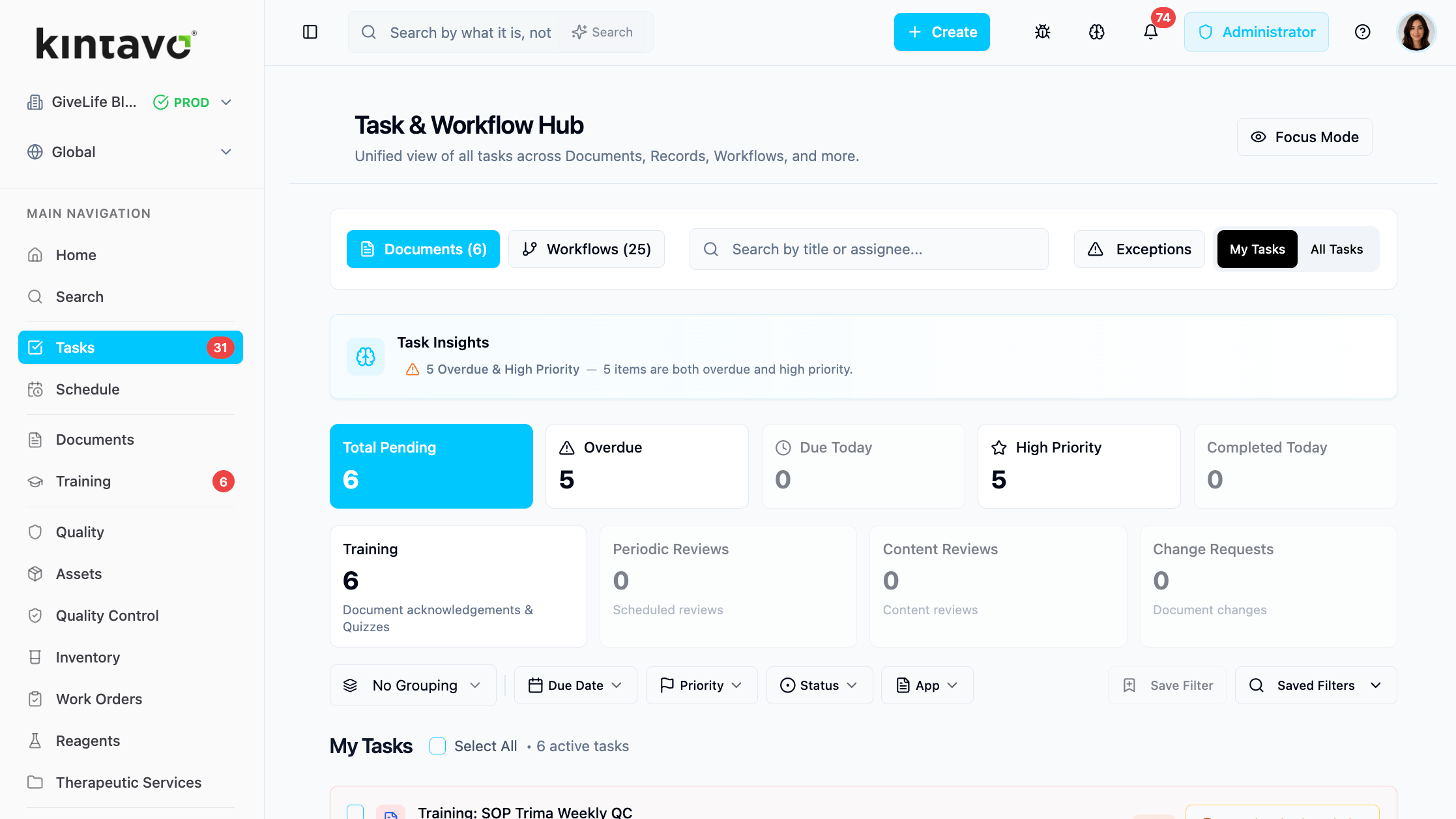
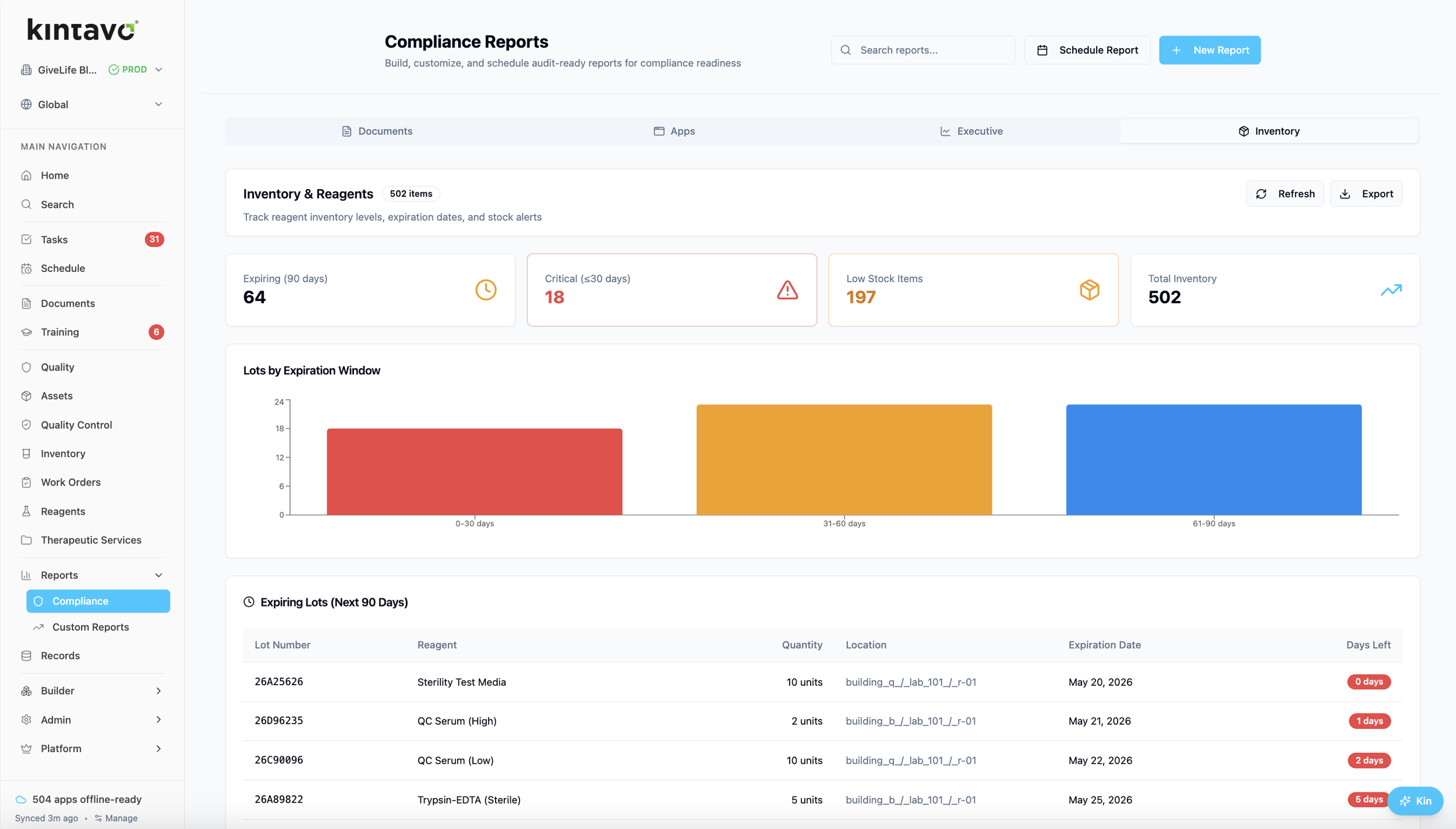
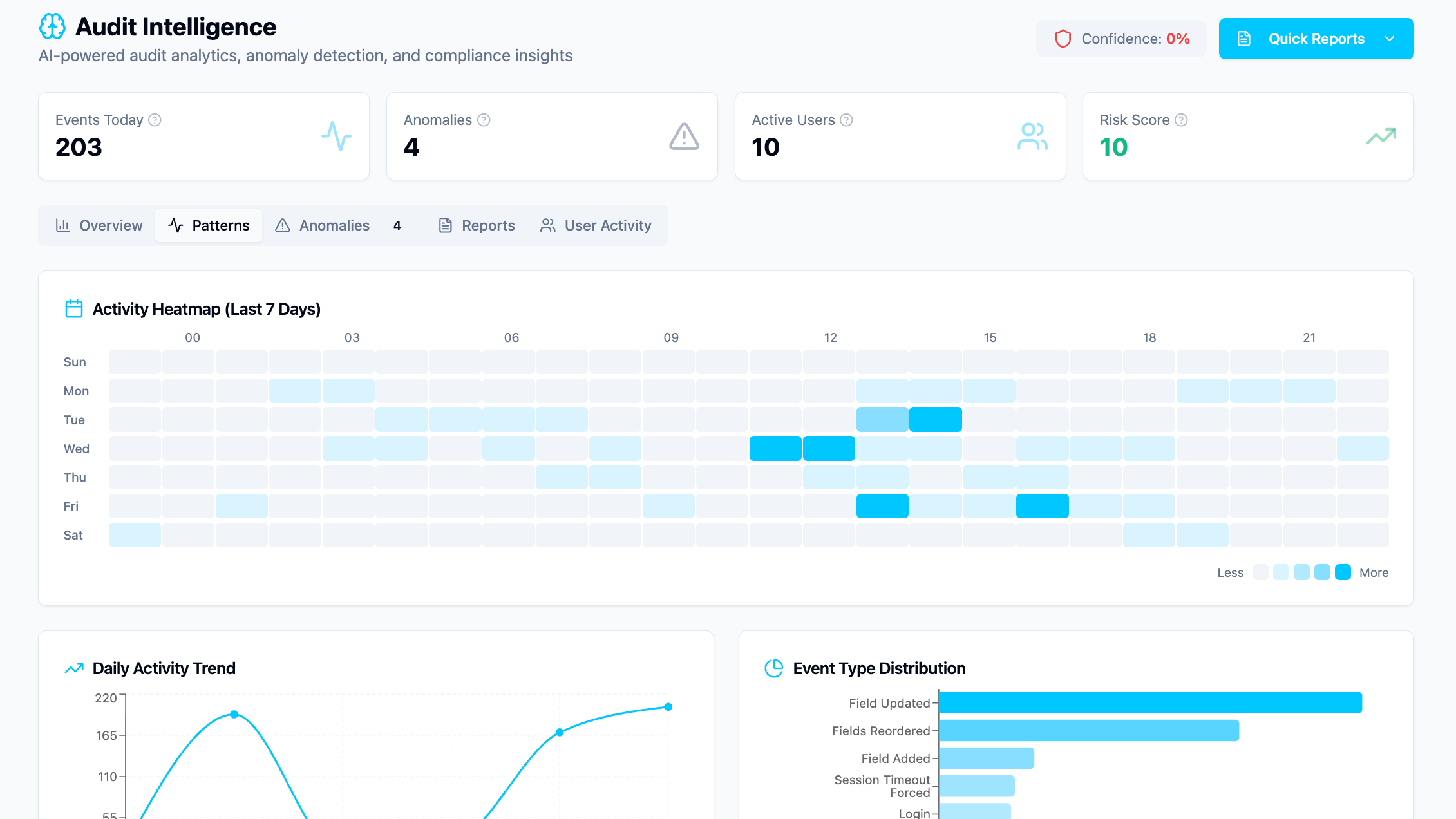
Compliance coverage for health system quality management.
Same platform, configured for every regulator and accreditor your facilities answer to.
Protected health information privacy and security requirements.
Clinical Laboratory Improvement Amendments for laboratory testing quality.
Accreditation standards for hospital and health system quality management.
Conditions of Participation — federal requirements for Medicare and Medicaid participating facilities.
FDA electronic records and signatures for regulated functions.
Quality management for medical laboratories within health systems.
Security and availability controls for health system data management.
Multi-site, multi-license.
One tenant. Per-site permissions, workflow variations, and reporting roll-up.
When your health system runs on Kintavo.
Quality stops being eight tools that don't talk to each other and starts being one system that does.
Quality events at any facility route through the same workflow.
Training gaps surface in real time across all sites.
Document updates propagate to the right staff at every location automatically.
Audit preparation for any facility takes hours, not weeks.
Your quality team stops managing systems and starts managing quality. That is what a platform built for health system complexity is supposed to deliver.
Book your demoFAQ Questions & Answers
Q: Does Kintavo support multi-site health system deployments?
A: Yes. Kintavo supports multi-site deployment with site-specific permissions, reporting configurations, and workflow variations managed from a central administration view.
Q: How does Kintavo handle HIPAA compliance?
A: Kintavo is HIPAA compliant with role-based access controls, audit trails for all record access and modifications, encryption at rest and in transit, and Business Associate Agreement support.
Q: Can Kintavo connect to clinical systems like EMR or LIS?
A: Yes. Kintavo integrates with EMR, LIS, and other clinical systems via API for health systems that need quality data connected to clinical workflow data.
Health system quality management is too complex for point solutions.
A single health system may operate under HIPAA, CLIA, Joint Commission, state health department requirements, and facility-specific accreditation standards simultaneously. Each facility may have different workflows. Each department has different training requirements. Each quality event has different escalation paths.
Managing that complexity across separate systems — a document management tool here, a CAPA spreadsheet there, training records in a learning management system with no connection to either — creates the exact fragmentation that generates compliance findings and audit observations.