21 CFR Part 11 Compliance Software — Built In, Not | Kintavo
← ALL FRAMEWORKS
COMPLIANCE COVERAGE

{{ c.h1 }}

{{ c.sub }}

{{ chip }}
THE PROBLEM

Most "Part 11 Compliant" Software Is Generic Software With a Signature Feature.

Part 11 compliance fails at the foundations: audit trails that can be disabled, records stored in tables an administrator can edit, signatures that are really checkboxes, shared logins that break attributability. A vendor checkbox that says "Part 11" tells you a feature exists — not that the architecture can survive a data integrity inspection.

And the burden lands on you: it is your predicate rules, your validation, your 483. The vendor’s marketing page is not in the room when the investigator asks who changed this record and how you know.

WHAT THE STANDARD REQUIRES

What Part 11 Actually Requires — Subpart by Subpart

Subpart B requires validated systems (11.10a), protected records retrievable through the retention period (11.10c), limited access (11.10d), and secure, computer-generated, time-stamped audit trails that do not obscure prior values (11.10e). Subpart C requires signatures unique to one individual (11.100), with two identification components and re-authentication in continuous sessions (11.200), cryptographically bound to their records (11.70).

Kintavo’s answer is architectural: records live on an append-only ledger the database itself refuses to alter, signatures require password re-authentication at the moment of signing, and the audit trail is the storage model — it cannot be turned off because it is not a feature.

WHAT AUDITORS LOOK FOR
Audit trails disabled, purged, or never reviewed — the most common data integrity citation.
Shared logins and generic accounts — attributability broken at the front door.
Corrected records where the prior value is gone — 11.10(e) violated by design.
Signature meaning absent — signed, but as what? Author, reviewer, approver?
WHAT KINTAVO REPLACES
Audit trail as a toggle → Append-only ledger as the storage model
Signature = a checkbox → Re-authenticated signature with recorded meaning
Corrections that overwrite → Corrections that preserve every prior value
Access reviewed annually → Role-based access with every grant logged
Validation as your project → IQ/OQ/PQ documentation delivered with implementation
CORE CAPABILITIES

Part 11 as Architecture.

Append-Only Records
No update-in-place anywhere: every change is a new entry with the prior value preserved — 11.10(e) by construction.
Re-Authenticated Signatures
Two components, password re-entry at signing, and the signature’s meaning — author, review, approval — recorded with it.
Signature-Record Binding
Signatures are cryptographically bound to their records; excise-and-transfer is not possible (11.70).
Role-Based Access Control
Least-privilege roles, unique accounts, and access changes that are themselves audited records (11.10d).
Time-Stamped Audit Trails
Operator, action, timestamp, before and after — generated by the platform, reviewable by Audit Intelligence™.
Validation Package
Vendor platform validation plus IQ/OQ/PQ for your configuration, written and executed with implementation.
WHAT IT LOOKS LIKE IN PRACTICE

A data integrity inspection opens with the classic request: show me every change to this QC record. The quality manager opens the record’s history — original entry, one correction with the prior value visible, the correcting operator, the reason, and the supervisor’s re-authenticated signature. The investigator asks how far back the trail goes. "To the first record in the system. It cannot be turned off." The line of questioning ends there.

EVIDENCE, NOT CLAIMS

The Record That Shows Its Own History.

Every row: who, what, when, before, after, and why. When an investigator asks how you know a record was not altered, the answer is that alteration produces a new entry — always, structurally, provably.
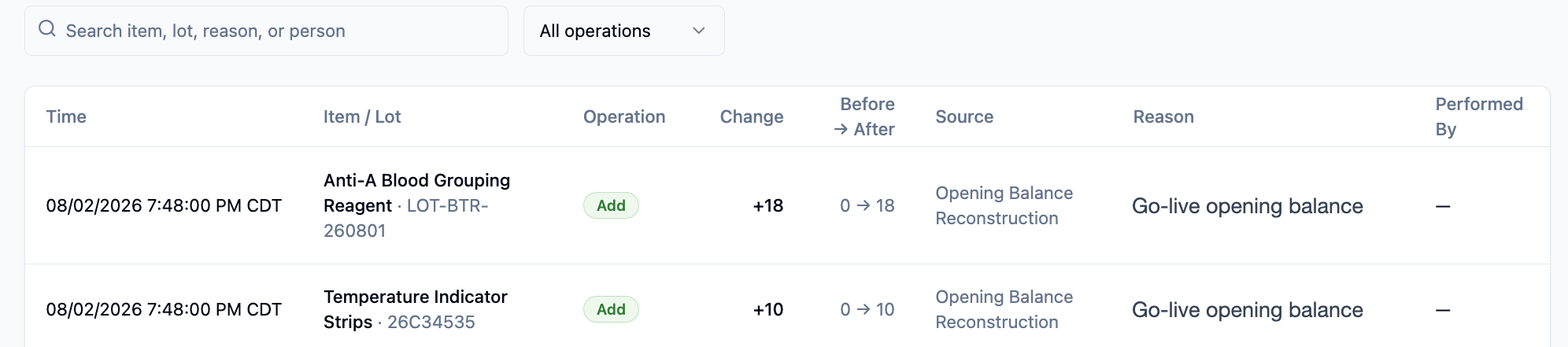
Kintavo append-only ledger rows with operator, timestamp, before-and-after values, and reason
SHOWN WITH SAMPLE DATA. YOUR NUMBERS APPEAR THE DAY YOU CONNECT YOUR SYSTEM.

Covered as architecture — not configured after the fact.

{{ p.tag }}
{{ p.title }}
{{ p.desc }}
MODULES THAT CARRY THE LOAD
{{ m.name }}→
WHO WORKS UNDER IT
{{ i.name }}→ Check your readiness in 3 minutes →
QUESTIONS & ANSWERS

21 CFR Part 11 FAQ

Is Kintavo 21 CFR Part 11 compliant?
Yes — architecturally. Records are append-only, signatures re-authenticate with recorded meaning, audit trails cannot be disabled, and access is role-based with unique accounts. Validation documentation is delivered with every implementation.
Who owns validation — Kintavo or us?
Both, per GAMP 5: Kintavo maintains platform validation; your configuration gets an IQ/OQ/PQ package written and executed by Kintavo that your team reviews and signs.
Can the audit trail be turned off or purged?
No. The trail is the storage model — every write is an append with the prior value preserved. There is no off switch to inspect.
Does Part 11 apply to our lab?
If you maintain records required by FDA predicate rules electronically — 210/211, 606, 820, 1271 — yes. CLIA-only labs are outside Part 11’s scope but inherit the same expectations through CAP data integrity requirements.

{{ c.cta }}

Book a Personalized Demo
RELATED For IT & validation teams →